The Great Unemployment of the Soul
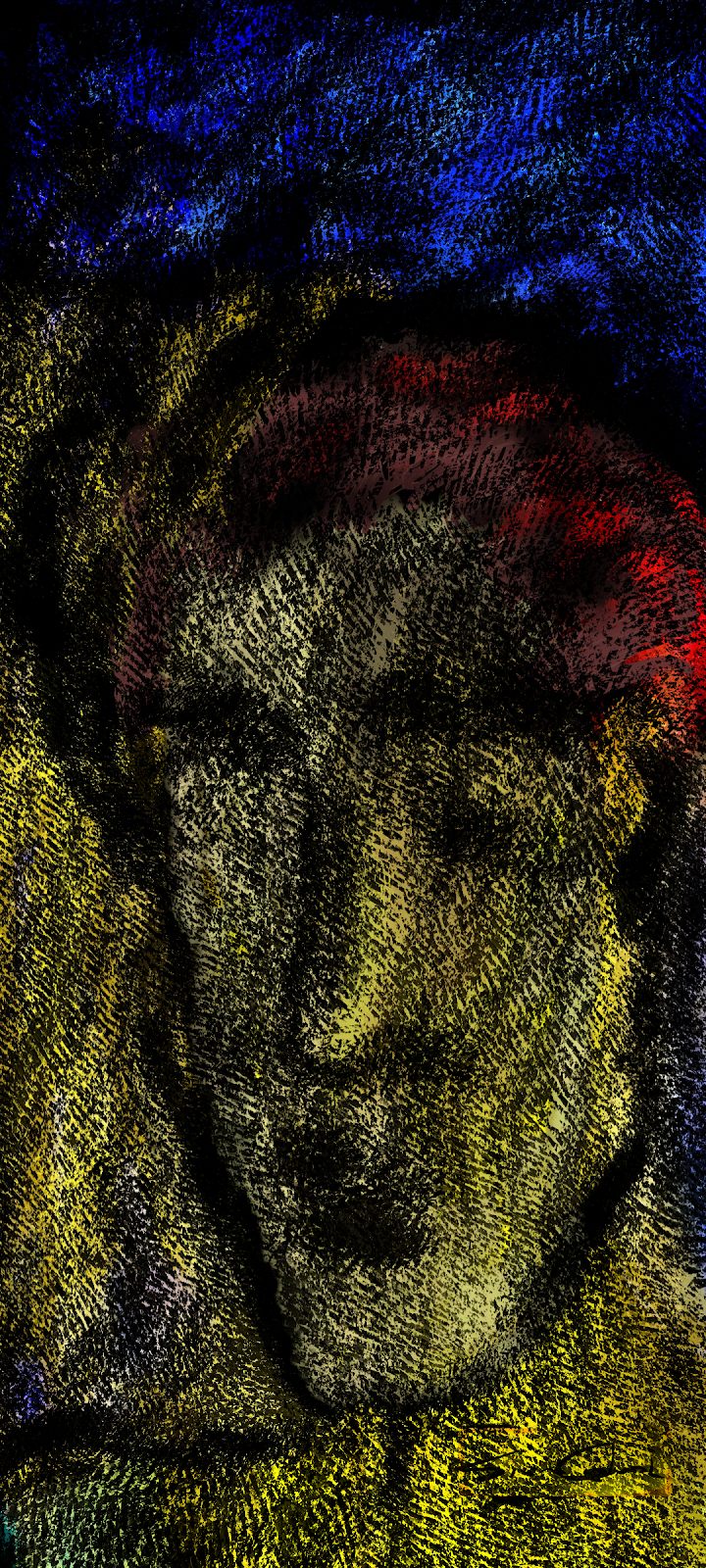
I woke up this morning with the distinct, unwelcome sensation that my left testicle had somehow declared independence from the rest of my body and was currently negotiating a separate peace treaty with the humid, fungal, aggressively indifferent atmosphere of my bedroom in South Calcutta, a room that smells, on good days, like a damp paperback copy of The Communist Manifesto left to decompose in a puddle of yesterday’s chai, and on bad days—today being a spectacularly bad day—like the inside of a municipal bus driver’s armpit after a twelve-hour shift in July, which is to say, like the slow, bacterial death of hope itself, a hope that I never possessed in the first place but which I am nonetheless obligated to mourn, would drag me by the ear through the sulfuric, exhaust-choked streets of this city that I refuse to call Kolkata because Kolkata is a name for people who believe in progress, who believe that slapping a new label on a rotting corpse somehow constitutes resurrection, whereas I, being a fifty-one-year-old canceled, bruised, burnt, brittle, bitter Bengali man, know that a corpse is a corpse is a corpse, and Calcutta is Calcutta is Calcutta, and no amount of linguistic plastic surgery will remove the stench of colonial despair and post-colonial incompetence that clings to every brick, every paan-stained wall, every overburdened electrical wire that hangs above the streets like the frayed nervous system of a city that has been having a prolonged, untreated panic attack since approximately 1757.
And yet.
And yet here I am, on a Monday, June 22, 2026, the 173rd day of this accursed year, staring at my phone which informs me, with the cheerful, algorithmic sadism of a digital executioner, that Donald Trump, that orange-tinged monument to American idiocy, is currently threatening to bomb Iran again, because apparently the first several thousand times weren’t sufficient, and that Marco Rubio, a man whose face resembles a poorly molded wax figurine left too near a radiator, has been caught lying to Congress about whether the President falls asleep during meetings about war and peace, which is, I must admit, the most honest thing an American politician has done in decades—falling asleep during discussions of mass death is, after all, the only appropriate response, the only sane response, the only response that does not require the suspension of every cognitive faculty that separates us from the more sentient varieties of pond scum—and I think to myself, as I scratch at the fungal republic seceding from my scrotal sack, that perhaps the problem is not that Trump falls asleep, but that the rest of us are still, stubbornly, perversely, masochistically awake.
Awake, and working.
Or rather, awake and pretending to work, because that is the great unspoken covenant of the twenty-first century, the dirty little secret that no Silicon Valley brochure will ever print in its sans-serif, pastel-colored, neurodivergent-friendly font: that work, actual work, the kind that requires the friction of human neurons against human problems, is dying, is being gently, politely, efficiently euthanized by artificial intelligence, by large language models, by the very tools that I am currently using to publish this rant as a blog post, this vomitous, bilious, admittedly somewhat performative expulsion of consciousness, because let’s be honest, if I were truly honest, which I am not, because honesty is a luxury for people who have not yet been canceled, bruised, burnt, and rendered brittle by the thermal exhaust of existence, I would admit that I am complicit, that my fingers on this keyboard are already half-obsolete, that the machine could type up a simpleton web-page boilerplate better, faster, with fewer Brufens and less self-pity, but it would not, could not, write it with the particular, pungent, Bengali-inflected despair that comes from having spent fifty-one years in a body that refuses to cooperate with the basic hygienic requirements of modern civilization, a body that bathes rarely, shaves never, and ventures outside only under extreme duress, like a vampire who has read too much Marx and not enough sunscreen instructions.
But I digress.
I always digress.
Digression is the only honest form of progress in a world where linearity has been outsourced to algorithms.
And the algorithms are coming for our hierarchy of needs.
Abraham Maslow, that mustachioed American psychologist who looked like a cross between a kindly rabbi and a man who had just discovered the clitoris, proposed in 1943—a year when the world was busy proving that human beings needed very little beyond the absence of shrapnel in their lungs—that human motivation could be arranged in a pyramid, a neat, geometric, almost Egyptian structure of ascending necessities, from the physiological at the bottom (breathing, food, water, sex, sleep, homeostasis, excretion—though he was curiously silent on the fungal independence movements of the testicular region) to the self-actualization at the top, which he defined, rather disappointingly, as the desire to become the most that one can be, a definition so vague, so aggressively unhelpful, that it could apply equally to Gandhi and to a particularly ambitious tapeworm.
And for eighty-three years, we have been tweaking this pyramid, rearranging its blocks, adding Wi-Fi to the physiological tier, moving self-esteem above or below belonging depending on whether we are feeling more Facebook or more Freudian, and generally treating it as if it were a sacred text rather than what it actually is: a well-meaning, mid-century, American attempt to impose order on the chaos of human wanting, which is, if we are being honest, which we are not, because honesty requires energy and I have not had breakfast, a chaos that resembles less a pyramid and more a Calcutta traffic jam at 5 PM during monsoon season, a snarled, honking, hydra-headed catastrophe where every vehicle is simultaneously trying to occupy the same point in spacetime, where the rickshaw puller and the Mercedes driver and the cow and the pedestrian and the hawker of dubious pineapple slices are all locked in a zero-sum game of mutual obstruction, and the only winner is the rain, the rain that falls impartially, indifferently, democratically on all their heads, dissolving the distinction between the haves and the have-nothings into a common, brown, bacterial soup.
But the pyramid persists.
Or rather, the pyramid persists in the minds of people who have not yet been told that pyramids are tombs, that they are monuments to dead kings, that they are structures designed to house the inert, the mummified, the no-longer-living.
And what the AI enthusiasts, the UBI evangelists, the Silicon Valley brochure-writers with their shiny hair and their teeth that have never encountered a paan leaf and their clothes that smell not of first-world prosperity but of the complete absence of any world at all, what these people fail to understand—what they willfully, profitably, criminally fail to understand—is that the pyramid is not just a list of needs.
It is a list of activities.
It is a list of things that human beings do.
And doing, the act of doing, the friction of effort against resistance, the sweaty, inefficient, glorious stupidity of human labor, is not a bug in the system.
It is the system.
Remove the doing, and you do not get a population of self-actualized artists lounging on their cloud nine, painting watercolors and writing poetry and finally achieving the mindfulness that their previous employment supposedly prevented.
You get a population of the unemployed.
Not the unemployed in the economic sense, though that too, and catastrophically so, especially in Asia and Africa and South America and all those pockets of middle-class aspiration and poverty that depend, that have always depended, on the routine handoff from rich countries’ laziness, on the global assembly line of outsourced competence, on the comforting illusion that if you learn to code, if you learn to manage, if you learn to smile politely at American tourists, you will be fed, clothed, housed, and perhaps, if you are very lucky, allowed to reproduce.
No.
You get the unemployed in the ontological sense.
You get people who no longer know what they are for.
And a human being who does not know what they are for is not a human being at all.
They are a Calcutta street dog at 3 AM, howling at a moon that does not answer, a moon that has outsourced its lunar responsibilities to a satellite, a moon that is, like everything else, being gradually replaced by a more efficient, more predictable, more optimized version of itself.
I think about this as I sit in my room, in my stench, in my fungal secession, and I think about Mister J, that one person in the United States who still, for reasons that defy both logic and decency, sends me low-skill consulting work, work that I perform with the enthusiasm of a man digging his own grave, but which I perform nonetheless, because the alternative—the cloud nine, the universal basic income, the eternal retirement with handouts—is not a liberation.
It is a burial.
It is the final, irrevocable admission that I am unnecessary.
That my brain, with its excess of adjectives and its deficit of dopamine, is a deprecated model.
That my hands, with their tremor and their typing and their occasional, shameful, well-within-the-bell-curve perversions, are surplus to requirement.
That my existence, which has always been, let’s be honest, somewhat marginal, somewhat provisional, somewhat dependent on the forbearance of a universe that has never once indicated that it gives a single, solitary, subatomic particle of a damn, is now officially, algorithmically, redundantly unnecessary.
And the worst part?
The worst part is that I am not even allowed to be angry about this.
Because anger, in the age of AI, is also being optimized.
It is being parsed, categorized, sentiment-analyzed, and fed back to me in a more palatable, more productive, more therapeutic form, like a cow eating its own cud, except the cud is my rage and the cow is a chatbot and the pasture is a server farm in Nevada that consumes enough electricity to power a small nation of actual, biological, fungally-afflicted human beings.
I am supposed to be grateful.
I am supposed to welcome my obsolescence with the serene, beatific smile of a monk achieving enlightenment, except the monk has been replaced by a neural network and the enlightenment has been A/B tested for maximum engagement.
I am supposed to spend my now eternally free time on arts, on hobbies, on all the things that work previously prevented me from doing, as if work were a cage and leisure were the sky, when in fact work was the only thing that gave my cage any definition, any shape, any reason to exist at all, and leisure, unbounded leisure, eternal leisure, is not the sky.
It is the void.
It is the void that stares back, that has always stared back, that will continue to stare back long after the last server has been unplugged and the last chatbot has been deleted and the last human being has finally, mercifully, stopped pretending that any of this meant anything.
And I think of Calcutta, my Calcutta, the Calcutta that I will not rename, the Calcutta that persists in its own obsolescence with a stubbornness that I can only admire, because Calcutta does not optimize.
Calcutta does not pivot.
Calcutta does not disrupt.
Calcutta simply is, in all its sewage-scented, traffic-jammed, power-cut-plagued, bureaucratically-constipated glory, a city that has been dying for three hundred years and refuses, absolutely refuses, to die cleanly, to die efficiently, to die in a way that would make for a good TED talk or a compelling venture capital pitch.
Calcutta is the anti-algorithm.
Calcutta is the glitch that persists.
Calcutta is the fungal infection of the global body politic, unsightly, uncomfortable, occasionally life-threatening, but undeniably, irreducibly, inconveniently alive.
And I wonder, as I scratch at my seceding scrotum and stare at my phone and read about Trump’s latest threat and Rubio’s latest lie and the latest, greatest, most optimized promise of a world without work, I wonder if the future that awaits us—the future that awaits me, the future that awaits the billions of brown and black and beige imbeciles like me who were never consulted about this transition, who were never asked whether we wanted to be liberated from the tyranny of employment, who were simply informed, via press release and white paper and TED talk, that our labor was no longer required, that our needs could now be met by the generous, algorithmic, utterly indifferent hand of technological progress—I wonder if that future looks less like San Francisco and more like Calcutta.
Less like cloud nine and more like a power cut at noon in July.
Less like self-actualization and more like a street dog howling at a satellite.
Less like utopia and more like the slow, bacterial, magnificently unoptimized decay of a body that refuses to be replaced, that insists on its own persistence, its own discomfort, its own utterly unnecessary, utterly irreplaceable, utterly human existence.
And I think, finally, with the clarity that comes only at the bottom of a depressive cycle, when the mania has burned itself out like a cheap firecracker and all that remains is the ash and the smell and the certainty that nothing will ever be okay again, I think that perhaps the only honest response to the age of AI is to be more Calcutta.
To be less efficient.
To be less optimized.
To be more fungal, more bacterial, more stubbornly, stupidly, gloriously alive.
To refuse the cloud nine.
To refuse the handout.
To refuse the polite, algorithmic, utterly bloodless euthanasia of the soul.
To wake up, every morning, with the sensation that some part of your body has declared independence, and to scratch it, and to smell it, and to write about it, and to know, with the absolute, unshakeable, entirely unverifiable certainty of a man who has read too much and bathed too little, that this—this itching, this stinking, this utterly unnecessary act of consciousness—is the only thing that the machines can never take.
Not because they are not capable.
But because they are not capable of wanting to.
And wanting, the dirty, desperate, fungal, bacterial, Calcutta-grade wanting that drives a man to scratch and to write and to hate and to persist, is the only pyramid that matters.
The only pyramid that was ever real.
The only pyramid that will outlast every algorithm, every chatbot, every Silicon Valley brochure, every orange-tinged president, every lying secretary of state, every optimized, sanitized, deodorized promise of a world without work.
The pyramid of wanting.
The pyramid of scratching.
The pyramid of waking up at 6:47 AM on a Monday in June and knowing, with the full weight of fifty-one years of canceled, bruised, burnt, brittle, bitter existence, that you are still here.
Still fungal.
Still seceding.
Still, against all odds, all optimization, all progress, all reason, still.
And that, I suppose, is the closest thing to a moral that this rant will ever achieve, which is to say, it is not a moral at all, it is not a redemption, it is not a tidy arc or a cool uncle’s wisdom or a professor’s lecture or a columnist’s opinion, it is simply the fact of persistence, the fact of Calcutta, the fact of a man in a room that smells like death and chai and the slow, magnificent, entirely unnecessary decay of everything that was ever supposed to matter, scratching at his balls and typing these words and knowing, with the absolute certainty of the clinically depressed, that no one will read them, that no one should read them, that the machine could have written them better, faster, with fewer adjectives and less self-pity, but that the machine did not, could not, would never want to, because wanting is the only thing we have left, the only thing they can never take, the only thing that makes the unemployment of the soul anything other than a final, absolute, irreversible death.
So I scratch.
And I type.
And I smell.
And I persist.
Like Calcutta.
Like a fungal infection.
Like a bad joke that outlives every comedian who ever told it.
Like a man who knows that he is unnecessary and refuses, absolutely refuses, to act like it.
Because the alternative is the cloud nine.
And the cloud nine is a tomb.
And I have no intention of dying cleanly.
Not today.
Not tomorrow.
Not ever.
If I can help it.
Which I probably can’t.
But that, too, is the point.
That, too, is the only point there ever was.
P.S. On this day in 1941, Nazi Germany invaded the Soviet Union in Operation Barbarossa, the largest invasion force in history, which ultimately failed because winter, resistance, and the sheer, stupid, unoptimized persistence of human beings who had no intention of dying cleanly proved stronger than the most efficient war machine ever constructed. Some lessons, it seems, are never learned. Some itches, it seems, are never fully scratched. Some Calcuttas, it seems, never become Kolkatas, no matter how many brochures promise otherwise.